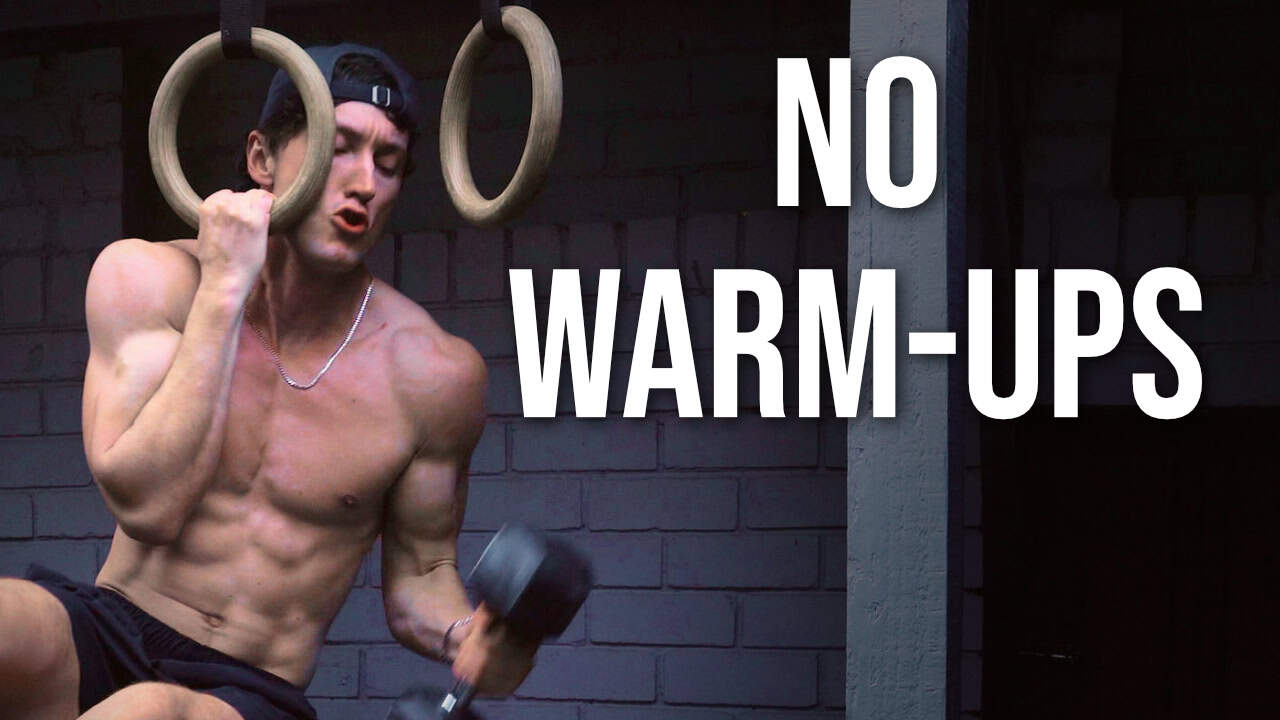
In this video we talk about training at maximum intensity without getting hurt. Here’s what we cover:
- Why intensity itself is not the cause of injury, but actually necessary for sustained growth
- The two biggest risk factors for injury that often affect beginners attempting high-intensity training
- How to train correctly in order to avoid these things and stay safe while getting stronger (with live demos)
- The role of warm-ups and why they are insufficient for protecting you against an improper training approach
Video summary
Intense, efficient training of just 40 minutes per week can help achieve strength and physique goals, even for older or less experienced individuals. The keys to avoiding injury are:
- Proper control of the training load, being able to instantly reduce the intensity to zero if needed.
- Limiting workouts to just one high-intensity set per exercise per week, which allows the body to fully recover and adapt.
This approach avoids the risks of both too much volume and not enough intensity, allowing for safe and rapid progress.
Full transcript
I’ve trained for less than 40 minutes a week for over five years, and in doing so, hit my lifetime strength goals and dream physique. And by far the biggest thing I see holding people back from doing this themselves is not age or ability. I’ve taught this process to people, 65 years old, female overweight undertrained, and it works for all of them often much better than more traditional approaches. The thing that holds so many people back from doing this before they’ve even given themselves a chance to start is a fear of getting hurt. And look, I understand completely where this comes from. The foundation of this whole method is intensity. If we want strength, muscle mass, mobility, a lean body composition, we need to get stronger. And the way that we do that is by working at our strength limit and pushing that limit up over time.
And the method that I use and teach and promote is basically isolating the network doing only it. And that’s why we get such fast results for such a little investment of time. But if you’ve never trained this way, the very premise of it can sound utterly absurd. Surely failing the whole way through your sets right from the start is a Shopify way to snap shit up within seconds as it happens. It doesn’t have to be. And I thought it was really important to make this video to break down why this fear is not unfounded, but directed at completely the wrong thing. And with that in mind, I want to give you an actual practical way to stay safe with your training. Stay injury free while being able to push your strength gains, muscle gain, body transformation along as fast as your body will allow. Even if you’re not doing this style of constant maximum intensity, six movements, 40 minutes a week, really efficient training yet, but you’re trying to get stronger, this is a really crucial concept to understand because the exact same things that will get you hurt doing this constant maximum intensity, force negatives training are just as likely if not more so to be problems in traditional weight training or callisthenics.
So there’s two fundamental misunderstandings that I see here. One that is going to hold you back from getting results while still potentially being at the same risk of injury. And another that concerns where the actual risks lie, which is essential to understand if we’re going to actually avoid them. So I’m going to talk through what we can’t avoid when we’re strength training and then take you through the actual risks and how you can avoid them so you can maximise progress, minimise risk, coding yourself as much as possible and get results. If we’re going to get stronger and set our bodies up to be mobile, be injury resistant, avoid muscle atrophy, reduce bone density immobility as much as possible as we age, then we need to stimulate our bodies to build that strength. And the way that we do that is through intensity is through challenging the current limits of our strength.
And as intimidating as that might seem, if you’re just starting out with resistance training eventually one way or another, if you go into continue progressing long-term, however you go about it, whatever programme you use, eventually you are going to do high intensity work at some point to continue pushing progressive overload and force your body to keep building muscle and strength, you’re going to have to challenge its current level of strength. And so one way or another past that absolute beginner level, you will train I intensely eventually or you will not make progress. And so if intensity is the only route to the progress that we want in order to build bodies that are injury proof, healthy, look good, then we can’t just avoid it forever. And it itself obviously isn’t the cause of injury and it’s not like removing the surrounding low intensity work from the high intensity stuff is going to put us at any extra risk.
When people see us starting and ending at failure at maximum possible intensity, they say, oh, that must be so dangerous. There’s no difference doing that. Then doing lots of tiny fraction of a second efforts of high intensity amongst a lot of lower intensity work. There’s no protective function of doing ineffective low intensity work around your effective high intensity work that doesn’t put you at any less risk of getting hurt. And as for warmups, whatever difference that makes in preparing your body to do the heavier work, realise that this is fractional marginal differences in injury reduction if you’re going to get hurt, warming up might give you a tiny bit more buffer before you get there, but it’s not going to save you. I don’t bother warming up because I’ve dialled the important things that keep me well clear of injury risk, which I’m going to take you through.
I just don’t see enough return on time and effort warming up doing lighter stuff to warrant it. And so I get straight into heavy work maximal effort and I’m not special. It’s not just because I’m young or I’m experienced, I’ve got these other things dialled that I’m going to walk you through. So I’m not saying warmups are bad, but realise that they are like a bandaid solution to the bigger issue. If you’re at risk of hurting yourself with training, they won’t save you. Okay? So we need to train intensely eventually. In order to make serious progress with strength and muscle gain, we need to reach our strength limit. We need to work hard to be stronger than we are now doing lighter work all around. Our heavy work is not going to help us. Warming up is going to do very little to reduce the risk of injury.
Where does the risk come from and how can we mitigate it as best as possible? There are two big potential pitfalls that I see that are risk factors for injury, particularly when training with this proper growth stimulating intensity that we want to train with. And they are firstly a lack of control of the load during training and secondly doing too much of it. So let’s look at these one by one and I’ll show you what we can do to mitigate them. So first, a lack of control over the training load. It’s very natural to look at the high end levels of difficulty. You see me challenging my maximum strength 10 years into training and think that that load looks impossible to handle. I’m going to stack it and destroy myself trying to do that. The obvious fear with heavy training is that if you get into a compromised position whilst training, you’re not going to have the strength or the ability to protect yourself, to protect your joints from injury because the load is so close to the maximum you can handle.
And that is a very valid fear. If we’re going to use an intensity that is maximally efficient and effective at stimulating growth, it needs to be at the limit of our strength the most we can possibly handle. And even higher than that on the negatives. But obviously if we’re using a load that big for us, what do we do if we get in trouble? What do we do when we can’t handle it? Now if you are getting that load from 150 kilo barbell and you get stuck partway through a rep, that is an issue. You’re absolutely right about that. The beauty of loading our training using the leverage our own body weight is that with a simple shift in our positioning, we can reduce the load from a hundred percent to zero in an instant. And this goes for all six of the movements that we use in our system with a simple shift load is gone.
And so the skill here, any of my students will go through this process. The first thing that you want to learn before you start packing on the difficulty is to know how to scale it down to zero before you start training. You want to be able to go through full range of motion reps on all the movements you’re doing without any load whatsoever on the working muscles. For instance, you see me doing handstand pushups like this, very scary. But before loading any weight on your hands, you can actually stand on the ground with zero weight on them and guard yourself through full range of motion reps from the bottom all the way up to a handstand position with your shoulders zero weight required, which means that in an instant, if things get too tough, you can drop back to this position. Load is gone. You’re always in control.
And only once we have that clear and we know what zero feels like, we can train full range of motion under zero load, then we can start to scale up the other direction, add load until we find our limit. Knowing we can back off at a moment’s notice on the handstand pushup, I might start to lean forward load weight onto my hands, step my feet up onto a platform, even get them up onto the straps. But if I need to scale down, I can just reverse those steps all the way to zero. Okay, so we’ve started training from a position of knowing how to take the load off. We’re training now at maximum intensity from the start of our first rep to the end of our set. The next obvious fear I see is that coming at this from a normal strength training gym, pilates, body weight training background, whatever, you instantly visualise yourself trying to do this gut wrenching, maximum intensity, constant failure training for the same amount of time that you would do those other things, which is equating apples and oranges.
And even if this was physiologically possible to do, it certainly wouldn’t be a good idea. You cannot expect to use a method that’s 50 times more potent than the next most intense form of strength training for the same amount of time as you would do it. It’s just not feasible. My most recent measure of how long I trained for total, summing up all my working sets for the week, 11 minutes, 11 minutes of training, that’s all I do on average each week, and that was a big week. If you’re doing 2% of the maximum, most effective, most potent work and cutting out everything else you need to keep it at 2% of that total training time. You can’t just suddenly 50 x what your body can recover from each week. It’d be cool if we could suddenly make progress 50 times as fast, but your body just has limits on how fast it can grow.
Without nefarious drugs, we can’t really affect that other than getting good rest and nutrition. So how do you actually go about implementing this? This is so different to normal training. How do you make sure you’re not doing too much? Well, still getting good training stimulus in, make sure you are growing each week as fast as feasibly possible. Glad you asked. The goal here is to obviously manage our weekly workload with the priority being recovery because that is where gains are made, muscle is built, strength developed, and our connective tissue joints, everything supporting those muscles goes and repairs itself and heals as well. So there’s a simple framework for doing this as what we use in our programme. It’s one set per week for each of your movements. So we use six movements and doing just one continuous set of each of them at some point throughout the week makes it really simple and easy to listen to your body’s own feedback.
By keeping it contained to just one set, we can just listen to what our body’s telling us. It will let us know when we’ve done enough, believe me. And the way that, say you take your front lever rows, you’re doing your set for the week, you’re working as hard as possible, you’re failing all the way up, getting stuck constantly. You’re failing the whole way down. Arms pried away from you going as intensely as possible. Nonstop. The way your rows are done for the week is when they’re no longer fun. As soon as I hit that point, it might be one rep in 2, 3, 4, depends how long I’m taking, depends how hard I’m really going. But I get to that point, we’re suddenly doing another rep. Sounds like a chore. That’s it. I’m calling it really simple and it’s easy to overthink it, but if you stop there, come back next week and just make that your rule.
That is it for the week. You’ll come back next week ready to give it hell, and I can guarantee you, you can just keep showing up every week and giving it that one continuous set. You’ll find ways to go harder to make things more intense, to make it heavier. And that’s all that needs to happen week on week for you to build muscle, get stronger, build it up to a front lever. In this case with enough weeks of doing that, get one good rep in full range of motion. The rest of bonus, don’t overthink it once. It’s no longer fun, you’re done. If you want to avoid injury or getting strong, do not fear intensity. It is ultimately the only path, however you end up approaching it, it’s the only path to your goal body. Don’t fear getting rid of the light work surrounding it either.
It’s not helpful and don’t look to warmups to save you. No amount of stressing or prehab routines are going to make up for irresponsible strength training. Get these two things right. Make sure you are in control of the difficulty of the movements as you train them. Make sure you can scale down to zero to moment’s notice and manage your weekly workload. Prioritise recovery. Prioritise the actual growth that needs to happen in between your training sessions. There’s no badge for training for a million hours a week. You get stronger by signalling it and allowing the growth to happen. Get this right 40 minutes a week from home. You can safely build the body of your dreams without a single warmup. I’ve done it. My students do it. If you want to make sure you do implement those two things correctly from the start, you can find out how we do this in the free training link is in the description below. Otherwise, chuck your questions in the comments. Look forward to reading those as always, and I’ll see you in the next one.
1 Response to "How To Train At Maximum Intensity Without Getting Hurt"
I am curious, how does this method combine with other forms of training that put somewhat high stress on your joints and muscles, like bouldering? Would a couple of sessions of hard to semi-hard bouldering per week in addition to this program create a too high total load, or would the fact that you are using intuitive methods to determine load during sessions lead you to naturally adjust for it?