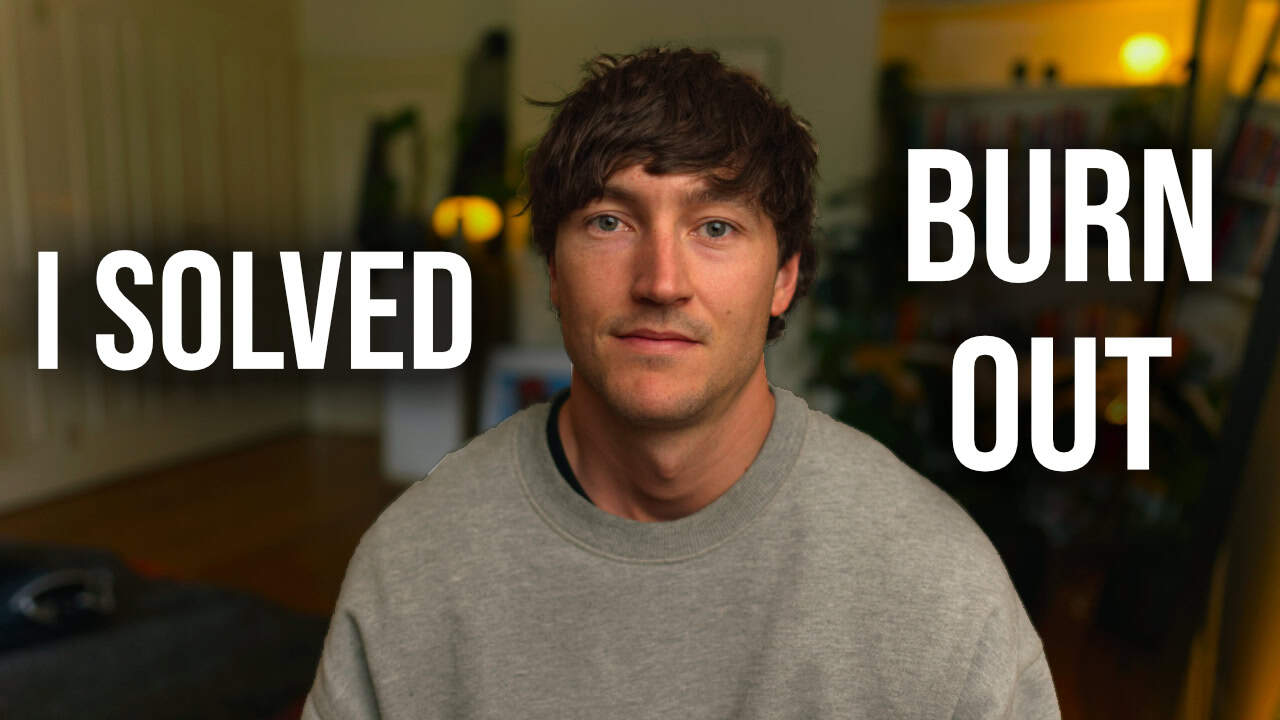
In this video we talk about the truth about productivity that a recent travel experience taught me. Here’s what we cover:
- Why focusing on time input can so often lead to overwhelm, mental fatigue and burnout while actually crippling productive output, and what I now focus on instead
- The counterintuitive key to maintaining a highly productive schedule with ample free time
- The 4 simple action steps I have implemented to increase my output while decreasing work hours dramatically
Full transcript
I recently went travelling for two months, reduced my work hours dramatically and was the most productive I’ve ever been in my life, and definitely the happiest and it blew my mind. You can study psychology and personal development all you like, but it’s often not until life punches you in the face with experience that you really learn anything. And one of the coolest things I think about travel is the complete temporary breakdown of a routine. When you remove the structure of daily life, there’s suddenly a lot of assumptions that get tested around what’s required, for example, for optimal sanity and productivity and fulfilment. I spent my recent trip in roughly equal parts with family, with friends, and solo, continuing to work the whole time running my business and upon my return to regular routine was hit with some pretty profound realisations. These have led to me making some seemingly simple changes in my life that have disproportionately improved my productivity and my wellbeing, reducing stress enormously while giving me back hours every day to use as I please.
So I thought I would share them that they may inspire some of you to run some similar tests and hopefully improve your life in some way too. I have bubbled a lot in the last few years with experiences of burnout and procrastination, emotional resistance to work, particularly creative work, which seems crazy considering how much I love what I get to do and the fact that I get to design my days to look how I want ’em to. I’m lucky enough to not only care about what I do, but also have a lot of freedom in how that work looks, which is what’s made me so curious as to how I can possibly still experience these difficulties because they just don’t seem necessary yet they’re there. And the irony to all this is that the solution that I’m finding now after 10 years as an adult eight spent studying and teaching psychology at university is basically exactly the same as what I’ve discovered it to be for fitness.
Years ago on my trip, I had plenty of things to fill my time with. I was travelling. There’s no shortage of fun options. And so when I would work, I was laser focused on getting things done because as soon as I had then I could go chill out, explore, enjoy myself, and something crazy came out of this work was never a drag. It was honestly the most productive I’ve ever been in my entire life per unit of time, if not overall, because in this context there was no procrastination, no mucking around wasting time. It was just pure output and it was easy. All the emotional resistance that I often associate with work had evaporated because as soon as I was done, I was off to do more fun things. And then I came back home to Melbourne feeling amazing and suddenly had so much more time available to me and almost immediately I ran into these same old patterns of resistance and mental fatigue and difficulty working.
But this time it was a kick in the teeth because I realised that I had not had this experience in over two months, and this was the huge epiphany for me. It was possible for work to always be this fun, effortless flow state process. It was possible for me to never need to battle this I can’t work feeling. And so this time when I experienced those things, I actually questioned why. And so as I like to do putting things to the test, I decided to model what was happening overseas to try and recreate this experience at home. And the results have honestly been ridiculous. So here are the changes that I made. The first came from understanding the rest recovery cycle of work. Just like with physical strength training, the more intensely we work, the more rest and recovery we need. What I realised coming back from travel where every bit of work was a hundred percent focused and it was easy to do that, I realised until this point in my career, I had basically constantly been trying to do too much, not too much in terms of work and getting things done, but I was constantly trying to spread that work out over way too much time because when I removed any guilt of needing to work all day and just had outcome goals, completable tasks that I wanted to get done, suddenly my work days were somewhat effortlessly getting compressed into several hours.
The problem was when I was at home and had so much time in the day, I felt a need to fill it with work. And that was the problem. Just like if we try and work out for hours every day, there’s no possible way we can sustain maximum intensity output. It’s exactly the same with creative work. I couldn’t sit and focus and actually do anything productive for 10 hours a day, but if I just went until I was satisfied with the effort, until I got done what I wanted to do or until I started hitting a wall of resistance, then I would get the same done. The only difference would be rather than then wallowing in guilt for the rest of the day, I’d actually just be relaxed and enjoying myself and the time off would then have meaning because I’ve used all my mental resources on the work.
And so the key thing I implemented shortly after this experience was a very simple but maybe the most game-changing thing I’ve implemented in my work to date. And that was the three daily tasks. I can’t remember where I read about this the first time. I know Taki Moore talks about this, the business coach, but rather than have hours of a workday plan, I now just aim for three needle moving important tasks that I want to do for the day. As soon as they’re done along with any other essential work, I’m finished. And this has shifted all my focus from time input and trying to slog things out to just outcomes, results, getting things done. And what I’ve noticed since implementing this is that after about four to six hours of intense focus, I’m cooked. But when I do allow myself to relax, after that work is done, then I’ve started to see that every single one of those mornings becomes more productive than full workdays were for me before, and I’ve removed an entire half day of anxiety and angst from my workday.
So the key point here is that when I set an off point, a finish line that was based on output, I went from being a slave to my own creation to a fucking work machine, and I’m getting the same workdays finished by 2:00 PM that normally would’ve dragged on all day with a whole host of angst and negative self-talk and wondering why I’m not able to keep focusing. Just like with strength training, if you try and do more, you end up diluting the same level of output over a longer period of time, and you have all these downsides of emotional resistance and extra accumulated fatigue, which is exactly what I was experiencing to date with work constant maximum intensity. Strength training isn’t hard. It would be hard if you tried to do it all day. And similarly, hyper-focused productive work isn’t hard, but if you’re trying to do it all day and aren’t planning for the other side of the coin, which is rest, it’s not going to work, at least not in my experience.
So that was actually step one, three daily task, then knocking off and actually being done as soon as I was done. The second change was understanding the importance of the remaining space because if there is one thing I’ve learned about productivity, it’s that it does not come from having more things in your calendar, but actually the opposite from having more space, the more empty space I can have in my calendar, the more room my brain has to work, the clearer I can think and the more I can produce. It’s this counterintuitive thing where the more we try and cram up our time into organised segments leaving less buffer, the less room there is for creativity to happen and it becomes very difficult to do anything worthwhile. And I only got a real appreciation from this, again while I was travelling and forced into it where most of the time, day to day was spent walking around aimlessly eating, socialising, doing things that weren’t planned at all and certainly weren’t work.
And the crazy thing is rather than feeling guilty or lazy, it was brilliant. I loved it, and the fact that I was still getting the same amount of work done in a week made me realise that we just don’t need to try and be productive all the time. Not only is it not possible, but aiming for it’s just not necessary. I think this is one of the hardest lessons to adopt in the culture, at least that I’ve grown up in Australia, especially when you are high achieving and have goals and want to get things done because it seems like all that dead space is a waste and that you’re not using your time the best you could. But what I’ve realised is that that empty space, that unplanned time is counterintuitively the most useful thing possible for allowing the work that you want to do to happen Monday.
Western society, we value hustle and working hard, striving for goals, we see the grind as a badge of honour. Striving for goals, striving to do things is excellent, but I think what’s valuable is the work itself, not the amount of time we put into doing it. Our whole concept of time as I see it is a little fucked up. If I get some incredible work done in the first four hours of the morning and then do nothing the rest of the day, am I less of a hard worker than the version of me that’s sitting at my desk for 12 hours hating it and getting nothing done? Because for me, it’s only as I’ve started to hit some goals and achieve some things that I’ve wanted to for a while that I’ve started to have the confidence to think that maybe we should challenge that idea.
At least for me, when you’re trying to calendar max, do as much as possible always beyond your brain just doesn’t work in that state and it’s like you’re jamming up all your creative resources. Chris Bailey said in the productivity project, a really good analogy that productivity is like traffic flow. Traffic flow is not determined by the amount of cars on the road, but the amount of space between them. I think it’s a beautiful analogy for expressing this concept. So the things I implement since coming back first, leaving as much space in my calendar as possible and valuing that dead time. I’ll talk about how I use it in the next point, but the idea is to maximise space room for your mind to work, minimise anxiety, and it allows step one that really focused intense work to actually happen. And imagine trying to do max intensity strength training.
If you had to run a marathon straight after, are you really going to work as hard as possible? And the second thing is my morning walk. Now this sounds simple. Going a walk first thing in the morning early, getting a coffee strolling through the park, one of the most profound things I’ve implemented into a routine in my life, why I think this has been so potent is that it’s an active practise of creating space. In my day, I’ve got a million things to do. I haven’t even started the work day yet, but the fact that I’m walking through nature, taking my time with no real direction to enjoy a coffee is literally programming into my brain abundance and space and calmness. I’m teaching my body every day through that practise that there is no rush and I’m all about turning goals and learnings into daily practises that can be just embedded into your routine and do the work for you for the stuff we’re talking about.
This is one of the best. The third change is about the rest of the time because the other thing that my trip taught me was that the other stuff outside of work matters way more than I was giving it credit. Doing nothing seemingly productive can be incredibly rewarding and there is more to productivity than just work, at least for me. The missing piece for me before the trip, and I think what made it difficult to implement these shorter, more intense work days and a more open calendar was actually having meaningful ways to fill the time because without an intentional way to fill it, that can almost be more scary than just working more. And I think that’s what’s led me in the past to end up just filling that time with more work thinking I can get away with it when as I said, there are no cheat codes here.
You can’t train at max intensity all day without intentional use of the rest of the time. You don’t give your brain a chance to rest and recover and be ready for your next day’s session of work. It’s just like with training. You then need to go and eat enough protein and provide your body with the nutrients to grow. I think you need nourishing downtime for your brain to go and recover from work and be recharged for the next day as opposed to having poor rest and a shit diet with no essential nutrients. Again, the beauty of it when I was travelling was that all this was obvious. It was built in. As soon as I’d finish work, I would socialise, I would walk around, I would do tourist things, I would go eat, I would have a beer. There was infinite social stimulation at my disposal, and because of this, I never felt bad for not working.
As soon as work was done, I was ready to go and enjoy the other side of the coin. That’s why I was travelling. So there’s sort of two action steps in terms of what I’ve implemented. The first is reading. I haven’t read this much since I was in primary school, and it’s amazing for me being able to learn and get through literature that I’ve wanted to for years. It’s been such a positive, yet relaxing practise, and I’ve done a lot more of that every day since making these changes. It’s been incredible. You could also add into this any other hobbies that you like. For me, reading’s been a goal that I want to do more of, and so now I’m doing that in my downtime, but it could be anything you want. I already play regular tennis and golf and surf and practise Spanish. This is just a change I’ve made, something I wasn’t prioritising giving time to before, but I think anything that you’re excited by that’s not work is a great thing to do when you’re not working and not feel guilty about it at all.
If you’ve ever experienced difficulty with focus, procrastination or resistance to work, then I hope this resonates on some level and inspires you to maybe go against the grain and testing some solutions. I found these lessons in particular so difficult to learn just because they are the exact opposite of what we have fed so constantly through mainstream culture, and so I hope sharing it is useful. Fitness has already proven to be on the shadow of a doubt that you absolutely can get better results from less time. It’d be far happier as a result if you’re intentional in what you do. I’m still very much an amateur at all this, but I see these universal principles apply to different domains and work is just such a big part of our lives. These changes have made my days so much better, and I know not everyone has the flexibility to able to determine what their entire workday looks like. But if there are elements of this that speak to you, I’d just encourage you to go and test them and back yourself in following your intuition at least enough to see for yourself what works. If you’ve had similar experiences with this stuff, let me know in the comments. We’d love to hear from you. Thanks so much watching, as always speaks to me.